


With the increasing prevalence of lithium-ion technology in industrial, commercial, and consumer environments, understanding the unique fire safety challenges it presents is essential. SMART Security Solutions asked Clyde Becker, director of Pyro Brand, for some insight into the mechanics of lithium-ion battery fire risks, especially thermal runaway, and to define a comprehensive, layered approach to fire detection and suppression.
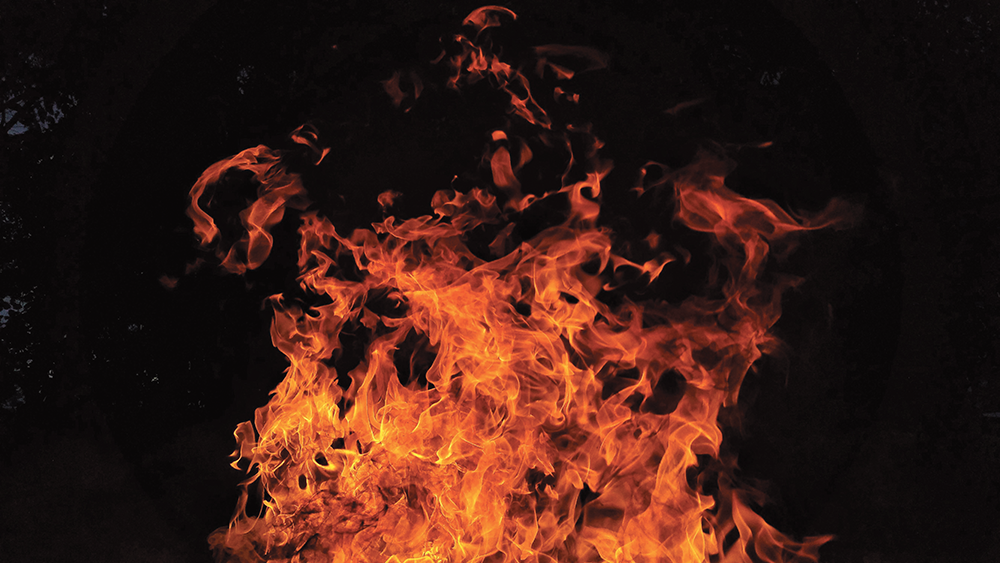
Starting with the fire risks, Becker explains that lithium-ion batteries store a large amount of energy in a compact cell, together with flammable electrolyte and reactive materials. They do not normally ignite without a trigger, but damage, overcharging, overheating, poor-quality cells, incorrect charging, or internal short circuits can cause rapid failure.
“Thermal runaway is when a battery cell generates heat faster than it can release it,” explains Becker. “The cell temperature rises, internal materials decompose, flammable gases are released, pressure builds up, and the cell may ignite, rupture, or vent violently. This can produce high-temperature jet flames that burn the electrolyte and emit toxic and flammable gases. The heat can then trigger adjacent cells, creating a chain reaction that is difficult to control with normal firefighting methods.
How do you stop Li-ion fires?
Given that Li-ion cells generate their own oxygen during decomposition, traditional smothering agents (like CO2 or standard foam) are largely ineffective once ignition starts. Unfortunately, Becker notes that there is no single agent that simply ‘switches off’ thermal runaway once it is fully established. CO2 and standard foam may knock down visible flames, but they do not sufficiently cool the battery core and may not prevent reignition.
His recommended approach is:
1. Isolate power and stop charging, if safe.
2. Evacuate and ventilate the area.
3. Cool the battery or surrounding risk aggressively where appropriate.
4. Prevent the spread of fire to nearby cells, stock, racking, or structures.
5. Contain damaged batteries in a suitable non-combustible medium.
6. Monitor afterwards with thermal imaging and gas detection due to the risk of re-ignition.
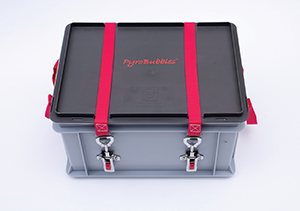
Pyro Brand recommends a layered approach using suitable detection, isolation, cooling, containment, and passive fire protection. For appropriate lithium-ion battery storage, transport, containment, and damaged battery applications, Pyro Brand offers Genius PyroBubbles. PyroBubbles assist through thermal insulation, heat absorption, oxygen reduction around the material, adsorption and binding of electrolyte and liquids, and physical containment. PyroBubbles are listed as A1 non-combustible under DIN 4102 and EN 13501, BAM-tested for electrolyte/liquid binding, and thermally resistant up to approximately 1050°C.
For battery pack and OEM applications, Pyro Brand also offers Pyrophobic LithiumPrevent, an intumescent thermoplastic passive fire protection solution designed to help prevent thermal runaway propagation within lithium-ion battery systems. Pyrophobic states that LithiumPrevent can be extruded or injection moulded for components such as cell holders, spacers, busbar covers and pack lids.
Detecting heat and thermal runaway
Detecting conditions that lead to a fire, such as smoke, may provide an opportunity to prevent Li-ion fires. However, Becker notes that smoke detection alone is too late for many lithium-ion risks. Detection should include battery management system data, temperature monitoring, rate-of-rise temperature detection, and off-gas detection.
Recommended early warning indicators include:
• Abnormal cell or module temperature compared with neighbouring cells.
• Rapid temperature rise.
• Hydrogen, CO, VOC, or electrolyte vapour detection.
• Voltage deviation, overcharge, undervoltage, or cell imbalance.
• Charger or battery management system fault alarms.
Exact thresholds depend on the battery chemistry, enclosure size, ventilation rate, state of charge, battery management system design, and installation risk profile. He says the safest approach is a two-stage alarm strategy:
Stage 1: Early warning: Abnormal temperature rise, off-gas detection, VOC/electrolyte vapour detection, or battery management system deviation. Action: stop charging, isolate the affected system where possible, increase ventilation, notify responsible personnel, and investigate.
Stage 2: Emergency alarm: Rapid temperature escalation, confirmed multi-gas alarm, smoke, flame, pressure event, or multiple system faults. Action: evacuate, isolate power if safe, activate the relevant containment or suppression strategy, notify emergency responders, and continue thermal and gas monitoring after the event.
Pyro Brand solutions
Pyro Brand supplies specialist lithium-ion battery fire risk solutions, including Genius PyroBubbles and products from Pyrophobic Systems, such as LithiumPrevent.
Genius PyroBubbles is a German-engineered extinguishing and insulating granulate used for battery storage, transport, damaged battery containment, hazardous goods areas, cable ducts, cavities, flammable liquid risks, and similar applications. PyroBubbles are certified as an A1 non-combustible building material under DIN 4102 and EN 13501, are BAM-tested for electrolyte and liquid binding, and have thermal resistance up to approximately 1050°C.
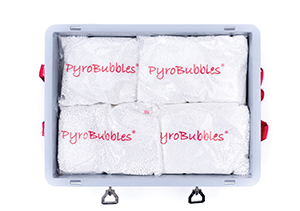
For transport and storage applications, PyroBubbles are used in battery containment systems for lithium batteries, including UN 3480 in line with SANS 10228. Available information also refers to use for defective or critical lithium batteries under ADR special provisions SV 376, SV 377 and SV 310, and packaging instructions P908, P909, P910 and P911.
Pyrophobic LithiumPrevent is an intumescent thermoplastic passive fire protection material for lithium-ion battery systems. Pyrophobic lists testing and certification references including UL 94, UL 9540A, ASTM E119, ASTM E84, ASTM E814, UL 263, CAN/ULC-S115 and other fire test standards.
Pyro Brand assists clients with:
• Lithium-ion battery risk containment.
• Safe storage and transport concepts.
• Passive fire protection.
• Damaged battery quarantine solutions.
• Product guidance for battery rooms, charging areas, warehouses, workshops, recycling facilities, transport environments and OEM battery applications.
• Integration advice around detection, isolation, ventilation, suppression, containment and emergency response protocols.
“Our view is simple,” states Becker. “Lithium-ion fire safety cannot rely on one extinguisher or one detection device. It requires early detection, electrical isolation, cooling, containment, ventilation, passive fire protection, and post-incident monitoring. PyroBubbles and LithiumPrevent form part of that layered protection strategy.”
For more information contact Pyro Brand,
| Tel: | +27 11 543 5800 |
| Email: | [email protected] |
| www: | www.securitysa.com |
| Articles: | More information and articles about SMART Security Solutions |
| Tel: | +27 11 543 5800 |
| Email: | [email protected] |
| www: | www.technews.co.za |
| Articles: | More information and articles about Technews Publishing |






© Technews Publishing (Pty) Ltd. | All Rights Reserved.
 printer friendly version