


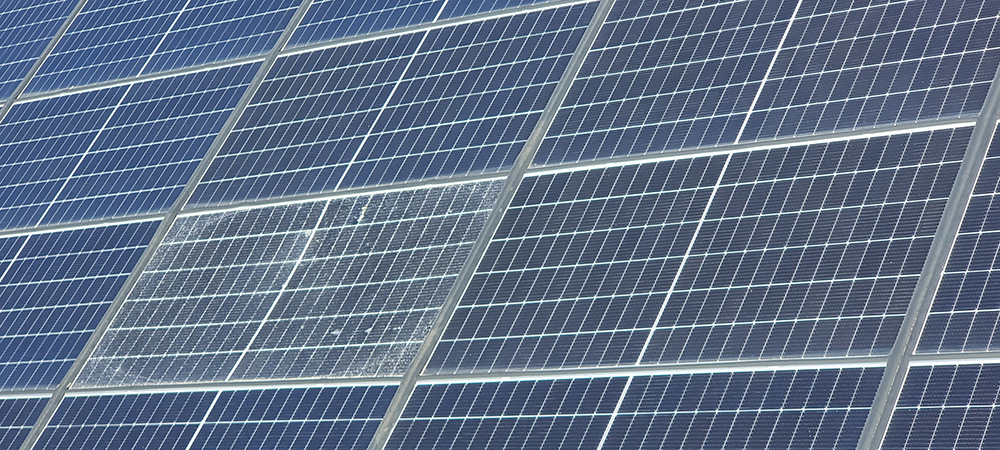
South Africa’s success in rolling out thousands of square metres of rooftop solar means there is a constant risk of fire in many sensitive locations nationwide.
Global research indicates that some 29 fire incidents occur annually per gigawatt (GW) of installed photovoltaic (PV) capacity, according to a peer-reviewed study on rooftop solar fires (https://tinyurl.com/26r9pp3u). SA has almost 7,5 GW of installed rooftop solar photovoltaic (PV) capacity.
Hotspots on solar panels reach temperatures approaching 200 degrees Celsius. In addition, many of the panels themselves have been installed in extremely questionable locations.
“Solar panels have been installed in eco-estates where there can be a huge amount of thatch. We have seen them positioned close to hazardous materials, next to aircraft, above vehicles, at game farms opposite hectares of dry bush, the list goes on,” says Phil Smerkovitz, managing director of GoThermal, a certified thermographic firm and a division of TeleEye SA.
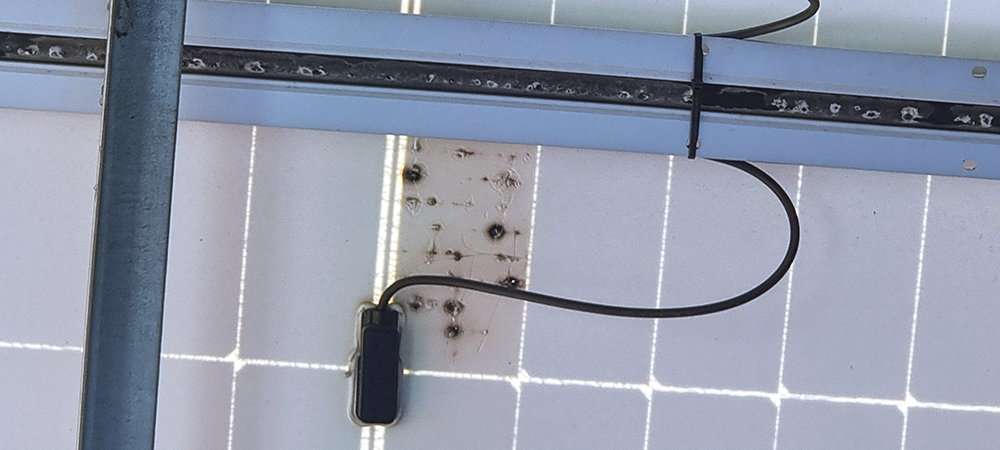
Hotspots are areas of localised heat that can ignite everything from bird nests to dry grass blown onto the panels. They have been flagged by the insurance industry as being an existential threat to solar arrays. Smerkovitz says evidence of physical burn-through is often seen on the back sheet insulation layer of solar panels, and the results can be devastating.
“Solar panels are only safe when professional thermographic inspections are carried out at least once a quarter,” he notes.
Ensuring a rooftop solar investment remains a true energy asset, and not the exploding fireball of Hollywood movies, depends on regular thermographic inspections that will, over time, detect any degradation in solar panels before they reach the critical burn-through stage.
“Drones and humans routinely inspecting both the roof-facing and the sun-facing sides of solar panels is the only way to identify panels starting to heat up in good time,” explains Smerkovitz.
Solar power is not an ‘install-and-forget’ investment. Silent underperformance and potential catastrophic fires result from dirt accumulation and unnoticed faults.
GoThermal has developed a solar panel fire-safety solution for local rooftop- and structure-mounted arrays. In minutes, GoThermal’s installation teams can secure linear heat detection technology underneath solar panels. The result is instant solar safety through real-time thermal monitoring of solar PV installations to identify hot spots, other fire hazards and performance degradation.
Hot spots on solar panels develop when a single errant solar cell consumes energy rather than generating it. Often invisible without thermal detection technologies, they can be caused by everything from bird droppings to partial shade that blocks sunlight from specific cells.
“Recent conversations with insurance underwriters about the growing threat to life and property from hotspot-originating fires have led GoThermal to focus on rollouts of heat detection technology to trigger alarms when critical temperature thresholds are reached,” explains Smekovitz.
GoThermal provides continuous monitoring across the entire solar array, enabling early detection of localised hotspots or electrical faults before they escalate into major fires. Its robust design is unaffected by harsh environmental conditions and can be integrated into existing systems to precisely locate a fire.
“Early hotspot detection is the smoke alarm for the solar industry,” concludes Smerkovitz.
For more information contact GoThermal,






© Technews Publishing (Pty) Ltd. | All Rights Reserved.
 printer friendly version