



As technology advances, companies have quickly learned that having disparate systems to handle different functions simply does not work. Where on-premises legacy systems may have handled individual functions well, these solutions often struggle to communicate and collaborate with one another. The end result? Data silos, inefficiencies, excessive manual intervention and poor visibility across the entire organisation.
Nowhere is this more evident than in the rapidly evolving logistics landscape, where supply chain disruptions, changing customer expectations, and rising costs are just some of the issues keeping managers up at night. For help, more companies are turning to integrated solutions that can streamline their operations, improve decision-making, automate tasks, and enhance customer service levels.
With the global e-commerce market expected to grow to over $8 trillion by 2028, up from about $6 trillion in 2024, there is ample opportunity for companies with the right people, processes and systems to manage the enormous uptick, while maintaining customer service levels and profitability. Technology helps companies achieve this balance, but only when the solutions in question are integrated, in sync with one another and operating as one unified, open ecosystem.
Breaking down the silos
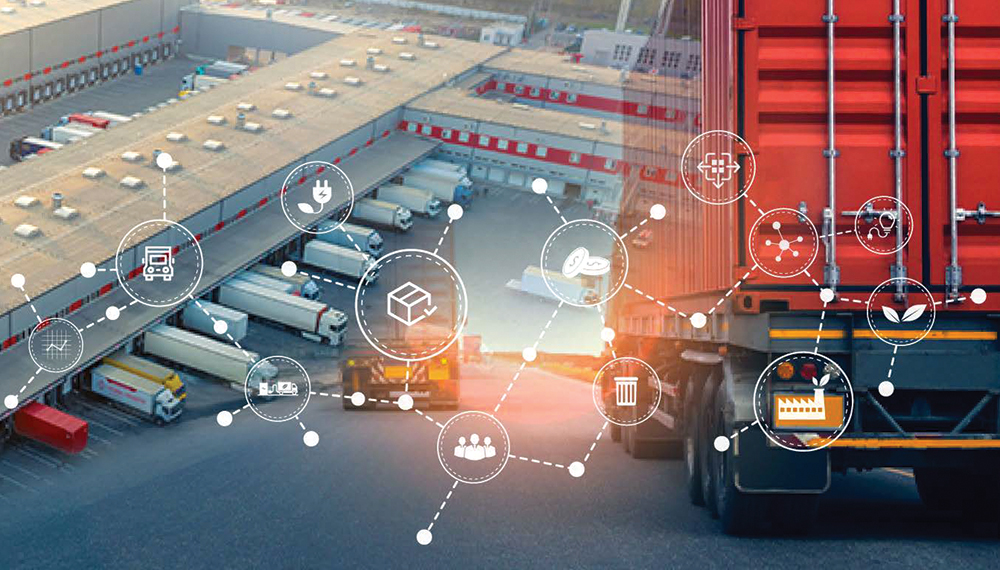
Myriad systems control different aspects of the business within the typical warehouse, distribution centre (DC), or third-party logistics (3PL) operation. Enterprise resource planning systems (ERP), warehouse management systems (WMS), transportation management systems (TMS), yard management systems (YMS), and video management systems (VMS) are all fundamental to the modern logistics operation.
The problem is that the complexity, fragmentation and siloed nature of these individual systems, most of which are developed by different vendors, can interfere with efficient management of the end-to-end logistics process.
The challenges created by disparate systems do not end there. When team members have to use spreadsheets and other means of sharing data across point solutions, for example, the process is not only resource-intensive but can also introduce errors. Data gaps also inhibit good visibility at a time when having accurate, timely insights has become more important than ever for logistics and supply chain operations.
To address these and other challenges, smart organisations are using more integrated solutions that break down silos and provide a unified view of the end-to-end supply chain, including both the warehouse and yard operations. By connecting their disparate systems and streamlining processes, companies can significantly improve efficiency, save money and enhance customer satisfaction.
Take the warehouse yard operation that is using a yard management system to manage incoming freight, drivers, licence plate numbers and arrival times. All of this data has to be collected at the gate and entered into the yard management system, but an integrated transportation management system can make that task easier by collecting all of the information in advance and then sharing it with the yard management system, video management system and other systems.
Optimising end-to-end logistics
The benefits of using an open logistics technology ecosystem are also evident on the warehouse loading dock, where inbound freight is handled by a WMS that, in many cases, operates as a silo. This not only impedes end-to-end visibility of the freight, but it also requires a lot of manual work as team members transfer data from one system to the next. The same goes for security systems, vehicle management systems, and other components of typical logistics operations.
Put simply, any system that can only manage its part of the overall logistics process can quickly become a burden for fast-moving, high-volume e-commerce operations. The good news is that Hikvision’s AIoT ecosystem serves as the connective tissue that companies need to be able to get their systems to collaborate with one another.
By seamlessly integrating disparate systems and devices, Hikvision’s AIoT ecosystem helps companies optimise their end-to-end logistics operations. Even better, there is no need to replace existing systems; Hikvision’s solution uses both standard application programming interfaces (APIs) and customised APIs (as needed) to connect and synchronise various systems, including warehouse management systems, transportation management systems, yard management systems, and enterprise resource planning systems, on a single, unified logistics platform.
Hikvision is working with technology partners to offer various solutions for end-to-end logistics operations, including parcel tracking, smart dock management, line haul management, automatic number plate recognition (ANPR) for identifying and recording vehicle licence plate numbers upon entry and exit, and access control, time attendance, and visitor management.
For example, the company’s warehouse management solution provides intelligent video capabilities and artificial intelligence (AI) for improving onsite security, enhancing yard traffic management and optimising dock scheduling. Knowing that loss prevention and efficiency are primary concerns for warehouse operators in today’s business environment, Hikvision’s dock management solution enables situational awareness of each dock and the goods that move across them throughout the day.
The warehouse management solution also integrates video security and third-party barcode reading systems data to easily identify and track parcels, elevate customer service quality, and boost response speeds. With these and other visual records right at their fingertips, both warehouse managers and carriers can improve vehicle and resource allocations, achieve maximum efficiency and minimise losses.
An open logistics system in action
Hikvision has helped many e-commerce and high-volume shippers streamline and optimise their logistics operations. For example, it frequently works with companies that want to improve package tracking in their e-commerce warehouses – a crucial aspect of determining goods-related responsibility and tracing issues.
Having video footage from the packing process can help warehouses determine responsibility for damage and lost items, for example, thus reducing the cost of compensation. Hikvision works with multiple WMS ecosystem partners to create holistic, open parcel tracking solutions.
Integrating barcodes from the warehouse management systems helps warehouses quickly locate relevant video footage, thereby reducing costs and improving efficiency. A CCTV system serves a wider range of scenarios and users. For example, Hikvision’s video management system integrates directly with its partner‘s WMS system to enable operators to quickly retrieve video footage of specific workstations for efficient tracking.
Hikvision’s benefits are also very clear out in the warehouse or distribution centre yard, which can often turn into the ‘black hole’ of the supply chain, when systems are unintegrated and paper is the primary avenue for sharing information about incoming and outgoing vehicles. Having integrated systems is critical in this area of the supply chain, where activities like vehicle scheduling and management are no longer just the security department’s responsibility.
Hikvision’s yard management system integrates with existing transportation management system platforms, allowing the logistics department to preregister vehicle information right in their yard management system platforms. Hikvision’s yard management system then uses AI to recognise licence plates and container numbers at entry and exit points, as well as loading docks, to verify the information. This ensures the orderly and efficient movement of vehicles at the gate, at the loading dock and out in the yard.
Once inside, drivers check in to queue for dock access, and Hikvision’s dock scheduling system notifies drivers automatically through an LED screen as soon as a dock becomes available. Operations staff can then monitor dock queue status in Hikvision’s yard management system, and dock cameras with AI algorithms automatically detect dock occupancy and progress.
Gain a competitive edge in a fast-paced market
Hikvision’s AIoT ecosystem offers a comprehensive solution to the challenges that e-commerce and high-volume logistics operations face on a daily basis. By seamlessly integrating disparate systems and devices, the open ecosystem empowers businesses to optimise their logistics operations, improve efficiency, gain real-time visibility and enjoy all the benefits of a smooth, efficient supply chain.
Hikvision has built extensive ecosystem programs based on an openness approach, including open devices, platforms, and collaborative resources. This approach boosts innovative applications and development with the company’s partners and helps customers in a host of industries grow their businesses with more security, efficiency, and intelligence.
The Technology Partner Program (TPP), which serves as a platform for collaboration between Hikvision and its various technology partners, is one of the cornerstones of the company’s comprehensive logistics management ecosystem. These collaborations help Hikvision combine its expertise, skills, technological understanding, and industry focus to deliver optimum customer solutions. Companies are invited to find out more and join Hikvision’s TPP open ecosystem at tpp.hikvision.com/.
By breaking down data silos and providing a unified, integrated platform, Hikvision helps growing logistics organisations streamline their operations, enhance visibility and do more with less. With a focus on open technology and strategic partnerships, Hikvision empowers organisations to adapt to the ever-evolving logistics landscape, ensuring a competitive edge in today’s fast-paced market.
The full white paper is available at tinyurl.com/3mzrxf4a
| Tel: | +27 10 085 8300 |
| Email: | [email protected] |
| www: | www.hikvision.com/africa/ |
| Articles: | More information and articles about Hikvision South Africa |






© Technews Publishing (Pty) Ltd. | All Rights Reserved.
 printer friendly version