


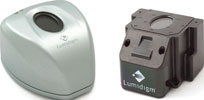
What could you do with a fingerprint sensor that is impervious to environmental conditions, is able to enrol everyone, and even recognises all known spoofs?
Multispectral imaging fingerprint sensors are turning the biometrics industry on its head. Developed by Lumidigm, an American biometrics company headquartered in New Mexico and distributed locally by Brand New Technologies, multispectral imaging fingerprint sensors are able to collect unique biometric data from both the surface and the subsurface of the skin.
This multispectral capability provides the advantage of independence from real world finger/sensor interface problems, such as moist or worn fingerprints, that prevent good image capture and reduce system performance. The user-friendly technology facilitates high throughput and universal enrolment.
Finally, multispectral imaging presents a non-invasive way to evaluate the qualities of the substance presented to the sensor, not just the pattern on the surface, permitting liveness detection like no other.
Fingerprint biometric performance is highly dependent on high-quality fingerprint images: there must be enough image data to make a reliable match. However, high image quality can be elusive in the real world. For example, bright sunlight floods the optics in some sensors, washing out the image. Rain obscures fingerprint ridges, resulting in images of puddles, not fingerprints. Multispectral fingerprint sensors capture high-quality images in these situations because they are able to overcome problems at the finger/sensor interface by providing additional data about the fingerprint from below the surface of the skin. The ability to image this 'inner fingerprint' helps provide high-quality images in common real world environmental conditions.
Multispectral fingerprint sensors also perform well on real-world populations that are difficult to image with conventional sensors. In the real world, people often approach the sensor with sweaty or dirty hands. They may have calluses obscuring their prints or have poor fingerprints because of genetic or health reasons. While conventional sensors have difficulty imaging these populations, the multispectral imaging sensors augment surface data with data collected from below the fingertip and produce high-quality images every time.
User populations have resisted biometric systems with conventional sensors because they have been difficult to use. Individuals have been required to 'help' the sensor by adjusting their finger pressure or placement, moistening or cleaning their hands before use, or using an exception handling process at enrolment or even daily because for whatever reason the sensor does not work on them. Multispectral imaging sensors virtually eliminate these problems, bringing a level of convenience to fingerprint biometrics that has not been seen before. Authorised users gain access on the first try, keeping lines short. Everyone can be enrolled, reducing demand for expensive exception handling. First-time users do not need special instructions to successfully use a multispectral fingerprint sensor.
Some high-security biometric systems require liveness detection - the ability to recognise counterfeits (spoofs) in order to prevent attempts to circumvent the system. Many conventional fingerprint sensors are easily spoofed because they capture only the image of the fingerprint ridge surfaces that come into contact with the sensor. These ridges are easy to imitate using common ingredients. However, multispectral imaging sensors collect subsurface fingerprint data that are extremely difficult to replicate. Thus, during a spoof attempt, a comparison between surface and subsurface data will not match and the unauthorised user cannot gain access.
Multispectral fingerprint sensors provide world-class performance, convenience and security in the real world where environmental conditions and user populations provide sometimes insurmountable challenges to other sensor technologies. Lumidigm's sensors have been deployed successfully around the world in applications ranging from high-security identity management to convenient commercial applications such as ticket fraud management. The technology is even being integrated by Methode Electronics for automotive OEMs who demand the most robust technologies. Lumidigm claims the world's largest commercial deployment, the world's largest government biometric deployment, and the world's largest dollar-volume biometric deployment. In all three cases, the customers were early adopters who recently replaced their original systems with multispectral fingerprint sensors. Their real world experience demanded multispectral imaging sensors. Yours does too.
For more information contact Dave Crawshay-Hall, Brand New Technologies, +27 (0)11 450 3088/92, www.brandnew.za.com






© Technews Publishing (Pty) Ltd. | All Rights Reserved.
 printer friendly version